MODELS 2026 and LangDev: Bridging the Gap Between Research and Industry
2026.10.16
Torremolinos, Málaga
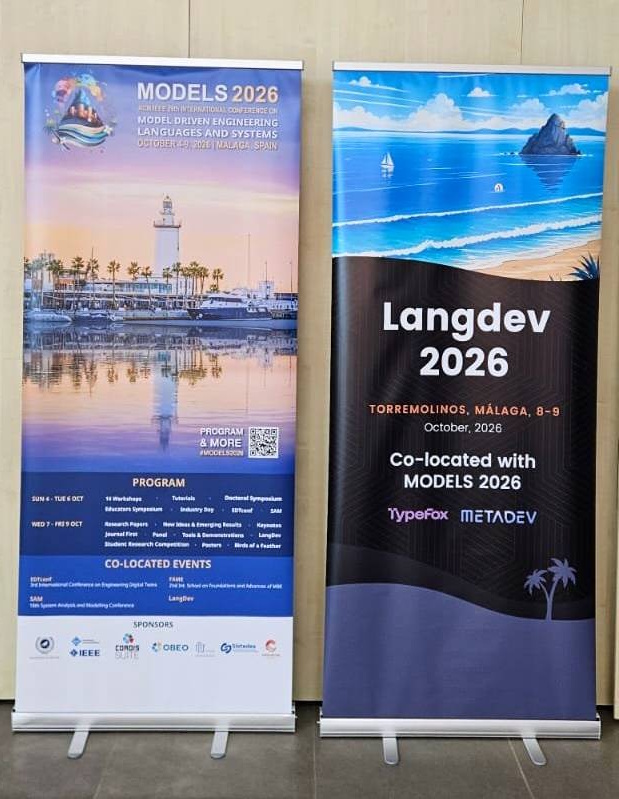
Model-Driven Engineering (MDE) has long helped improve the way we design and develop software and complex systems. Yet one of the field's ongoing challenges is turning research advances into practical tools and solutions that address real industry needs.
During the first week of October, we took part in MODELS 2026 and LangDev 2026, held in Torremolinos, Málaga. Both events brought together researchers, developers, and industry professionals to share experiences, explore new approaches, and discuss the future of Model-Driven Engineering and Language Engineering.
For us at Metadev, it was an opportunity to contribute to these discussions, drawing on our experience developing modeling tools and software engineering solutions, while learning how other teams are tackling similar challenges.
Industry Day: Bringing Research and Industry Together
On October 6, MODELS 2026 Industry Day focused on real-world applications of Model-Driven Engineering and the challenges involved in adopting these technologies in industry.
The program featured speakers from organizations including Boeing, Airbus, Siemens, Thales Alenia Space, the European Space Agency (ESA), PTC, and Obeo. Through their presentations, they shared experiences involving Model-Based Systems Engineering (MBSE), artificial intelligence, digital twins, and engineering solutions for complex systems.
This year's Industry Day was particularly significant for Metadev, as Pedro J. Molina served as co-chair alongside Dimitris Kolovos from the University of York.
In addition to helping organize the event, Pedro contributed to two technical presentations. In "Beyond the Hype: Blending Gen-AI and Model-Driven Engineering for Pragmatic Enterprise Modeling," he explored how generative AI and Model-Driven Engineering can complement each other to support practical approaches to enterprise modeling.
He also joined Meinte Boersma from DSL Consultancy for "Standards for Models Interoperability," a presentation focused on the role of standards in enabling interoperability and model exchange across different engineering tools and environments.
Beyond the scheduled talks, Industry Day raised questions that we believe are central to the future of our field.
From our perspective, the challenge is not simply to develop increasingly sophisticated technologies, but to make sure they can be integrated effectively into the tools and workflows engineering teams use every day. AI is opening up new possibilities, but we believe its greatest potential lies in combining those capabilities with approaches that provide structure, traceability, and control.
This perspective is closely aligned with our work at Metadev: using advances in technology to build tools that make software development more effective without compromising the rigor and reliability required in engineering environments.
LangDev 2026: Sharing Perspectives on Language Engineering
The week continued with LangDev 2026 on October 8–9, an event closely connected to our work in Language Engineering.
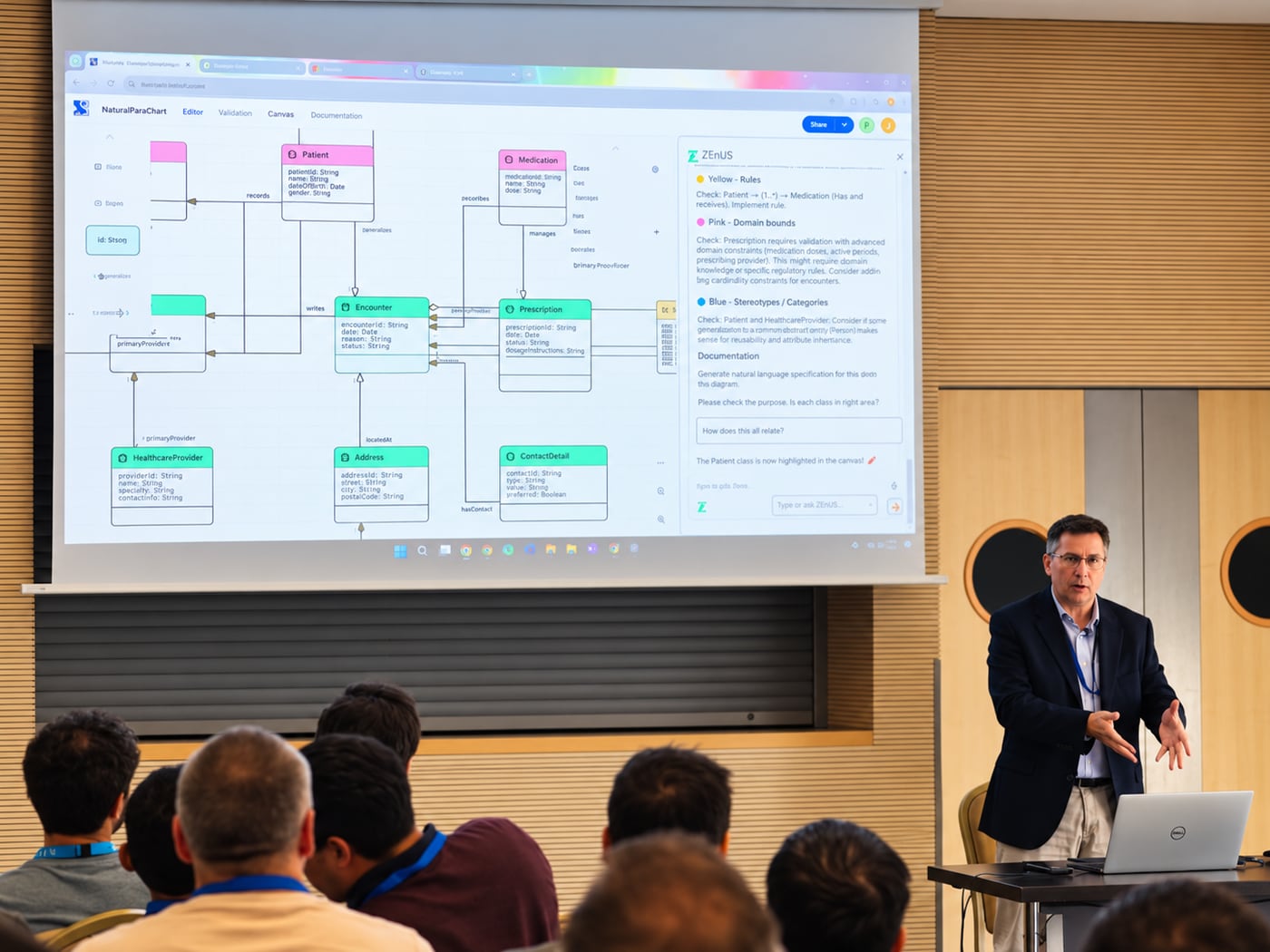
This year, we contributed two technical presentations. Pedro J. Molina and Pablo Rodríguez presented "Improving the Modeling Experience with gen-AI," exploring how generative AI can improve the modeling experience.
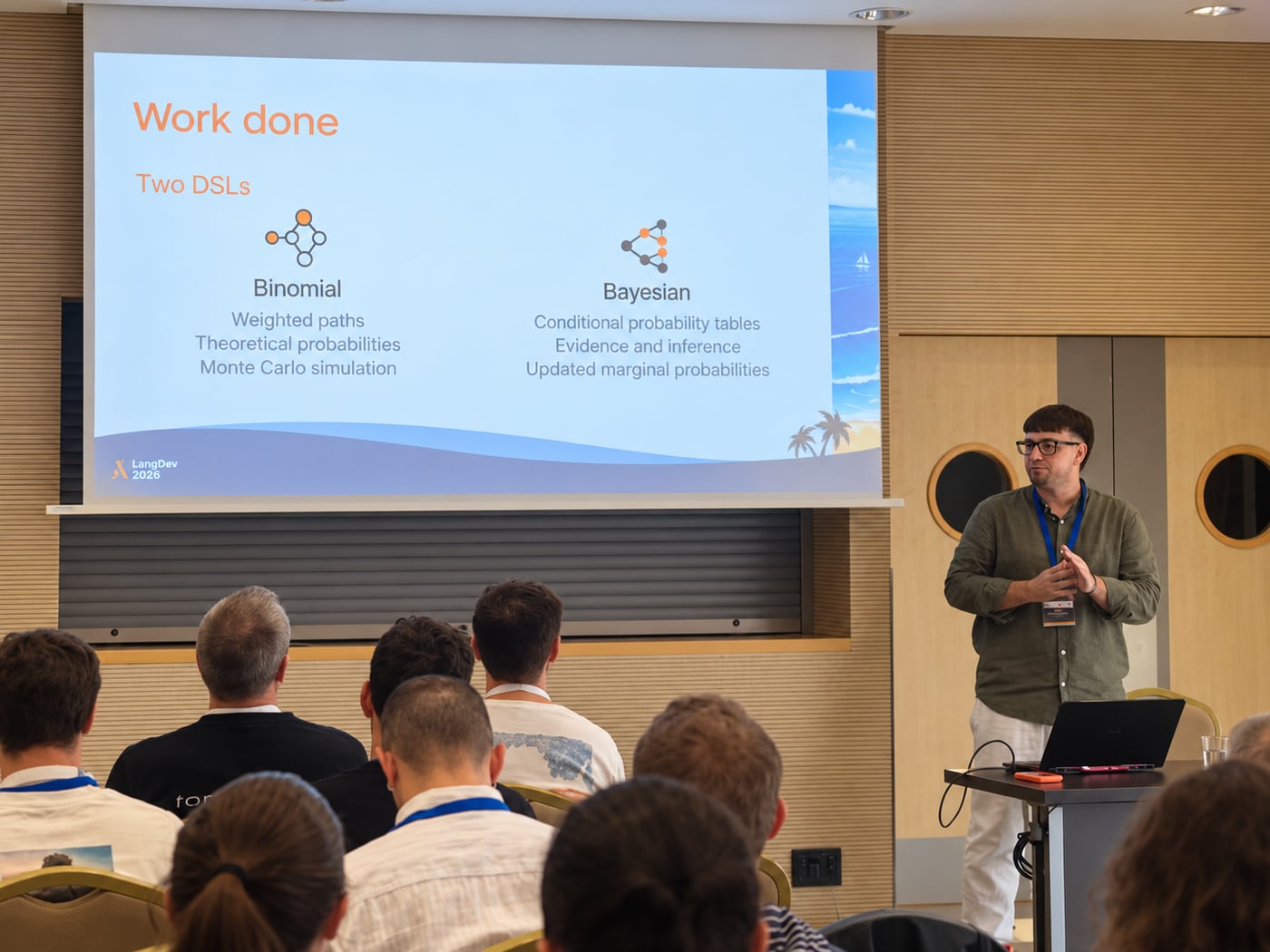
Juanjo Amores and Pedro J. Molina also presented "DSLs for Risk Management," focusing on the application of domain-specific languages to risk management.
The program brought together a range of perspectives on DSL development, language engineering tools, and the integration of AI into modeling and software development workflows.
As is often the case at events like these, conversations between sessions were another valuable part of the experience. They gave us the chance to exchange ideas, share experiences, and learn how others in the field are approaching similar challenges.
From Research to the Tools We Build
Our involvement in MODELS and LangDev reflects how we approach software development at Metadev.
We believe models should be more than static representations of a system. When used effectively, they allow teams to work at higher levels of abstraction, communicate design decisions, validate structures, and develop more consistent and maintainable solutions.
This approach is reflected in tools such as Structura, designed for domain modeling, model validation, and deterministic code generation, and Apricot, our collaborative, web-based SysML v2 editor built to support systems engineering teams.
Although these tools address different needs, they share a common goal: making modeling technologies more accessible, practical, and useful in real-world software development and engineering workflows.
Participating in events like MODELS and LangDev gives us the opportunity to challenge and refine our thinking through conversations with researchers, developers, and professionals working across different industries.
We came away from this year's events with fresh perspectives, valuable discussions, and renewed motivation to keep exploring how research advances can translate into practical solutions for software and systems engineering.
We would like to thank the organizers of MODELS 2026 and LangDev 2026, the University of Málaga, and everyone who contributed to these events for fostering collaboration and knowledge sharing between research and industry.